
Electric commercial vehicle manufacturers in India are struggling to meet localisation requirements under the PM eDRIVE scheme, set to begin on Tuesday. The Society of Indian Automobile Manufacturers (Siam) has requested a seven-month extension until April 1, 2027, citing disruptions in the supply of rare earth magnets due to China's export restrictions and geopolitical tensions. The government is yet to decide on the request, which aims to prevent production disruptions and allow time for local supply chain development.

Tata Motors Passenger Vehicles (TMPV) is strategically expanding its international footprint by launching the Nexon, rebranded as Osprey, in South Africa, a move set to significantly boost its export volumes and solidify India's position as a major automotive export hub.

The Ministry of Heavy Industries (MHI) anticipates disbursing approximately 4,700 crore in incentives under the automotive PLI scheme in FY27, more than double the previous two years, while also exploring financing mechanisms for electric buses and trucks and promoting domestic manufacturing of critical EV components.

As India's festive season approaches, passenger vehicle dealers are seeing a notable increase in inventories, yet discounts remain surprisingly moderate compared to previous years, signalling a tighter demand-supply balance in the automotive market.

Volkswagen, a long-standing but minor player in India's fiercely competitive automotive sector, is now exploring a strategic partnership with the JSW group, aiming to revitalise its market presence, enhance profitability, and potentially establish India as a key export hub for electric vehicles.

India's passenger vehicle (PV) exports saw a 17 per cent year-on-year decline in August, contrasting sharply with a 36.5 per cent surge in domestic dispatches, which reached a record high for the month as automakers prepared for the festive season.

India is set to launch Bharat Vecto, its first certification tool for assessing the fuel efficiency and CO2 emissions of medium and heavy commercial vehicles, by December, with a full launch targeted for the Bharat Mobility Global Expo in February 2027.

J R D Tata, chairman of the Tata group from 1938 to 1991, said that whenever he had to make a difficult decision, he would ask himself, what will be good for India, and what will be good for the Tatas. If he had a doubt, he would decide in favour of India. In the long run, it would turn out well for the Tatas too, he said, points out Arun Maira.

Indian passenger vehicle manufacturers are significantly increasing production and stocking dealerships in anticipation of strong festival season demand, with new launches planned and supply bottlenecks being addressed. However, the industry faces potential moderation in growth during the second half of FY27 due to a high base from last year's post-GST surge, commodity inflation, and elevated inventory levels.
With passenger vehicles (PVs), two-wheelers and three-wheelers registering double-digit growth, manufacturers raise production as the industry enters the festival season.
India's passenger vehicle industry is poised for a record-breaking year in 2026, propelled by robust dispatches in the first half of the calendar year and strong demand for utility vehicles, despite facing several economic challenges.
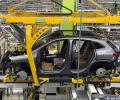
Automobile manufacturers are increasingly vocal about the mounting paperwork and delays associated with India's Production-Linked Incentive (PLI) scheme for the automotive sector, arguing that compliance requirements are becoming as challenging as meeting technical eligibility conditions. They are pushing for a simpler, faster, and more predictable certification and compliance framework.
Under FAME-II, automakers provided subsidies to electric vehicle (EV) customers at the time of purchase, with the understanding that the government would reimburse the firms later.

It, however, conceded that 20 per cent blending of ethanol with petrol leads to 3-5 per cent lower mileage in vehicles than conventional petrol, but said the blend offers a significantly higher octane rating, superior anti-knock properties, faster combustion, better pickup, smoother acceleration, and cleaner engine operation.

"There is a sharp jump that we have seen in bookings of EVs... The jump, at least in our case, in just two months, it is about 2 to 2.5 times of what it used to be"

India's leading passenger vehicle manufacturers are significantly increasing investments and factory capacities, alongside planning major product launches for FY27, driven by strong confidence in sustained domestic demand growth despite global geopolitical tensions and supply chain risks.
India's rapidly ageing truck fleet, with 42% of vehicles over 12 years old, is set to trigger a replacement-driven growth of 3-5% annually over the next five years.

'The reported deal between the European Union and China should mitigate it (shortage) for the medium to long term. Let's wait and watch how this plays out.'
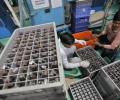
The automobile and auto-ancillary sector is expected to show strong Q3FY26 results, aided by festival-led demand, rationalisation in goods and services tax (GST) rates for select categories of vehicles, easing interest rates, and improving rural sentiment.

'...the enormous responsibility and faith the youth has put on his shoulders, that he is going to solve their problems.'

The India-EU free trade deal could help Indian-made cars enter Europe at lower costs and challenge Chinese dominance.

For FY26, the company has adopted a cautious outlook, anticipating domestic growth to broadly track the industry's low single-digit estimated growth amid ongoing economic headwinds.

'The market is still very bullish. The demand is so strong that for eight models, we have no units in our factories to dispatch to dealers,' said Partho Banerjee, senior executive officer, marketing & sales, Maruti Suzuki India (MSIL).

In October, small car wholesales of the auto industry -- excluding Tata Motors -- went up by 8.4 per cent Y-o-Y to 116,601 units, the data showed. However, the utility vehicle (UV) segment which includes sports utility vehicles (SUVs) as well as multi-purpose vehicles (MPVs), saw a bigger growth in October.

A deep split has emerged within India's auto industry over the proposed CAFE exemption for small cars, with only Maruti Suzuki and Renault backing the move in the final SIAM vote.

Passenger vehicle dispatches from companies to dealers increased 19 per cent year-on-year in November as demand remained robust post festive period, industry body SIAM said on Friday.

Usually, in the western view, corporate success is attributed to efficiency, organisational structure, and scale. R Gopalakrishnan and Harish Bhat argue that philosophy, culture, and the transmission of values are more important for sustaining growth and profitability of an enterprise over a period of time.

Mexico on Thursday imposed a tariff of up to 50 per cent on imports from its non-preferential trade partners, including India, a move that might hit New Delhi's annual $5.75 billion shipments to its third-largest car export market.
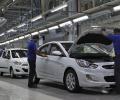
India must act decisively to fully leverage the vast opportunities that exist in India for developing the entire rare earth magnet ecosystem, SIAM president Shailesh Chandra said on Thursday. The government is considering incentives for the production of rare earth minerals and magnets in response to China's restrictions on its global supply, which have disrupted the supply chain.

Companies with "gas guzzlers" are trying to set up the wrong narrative against small cars getting relaxation in the proposed corporate average fuel efficiency (CAFE-III) norms on the basis of weight, Maruti Suzuki senior executive officer corporate affairs Rahul Bharti said on Monday, bringing to the fore deep division among carmakers regarding the upcoming rules.

Automobile exports from India rose 26 per cent year-on-year in September quarter driven by highest-ever shipments of passenger vehicles, two-wheelers and three-wheelers during the period, as per the latest data released by industry body SIAM.

Between April and August this financial year, passenger car exports rose 8.5 per cent year-on-year (Y-o-Y), while domestic sales fell by 8.5 per cent.

Maruti Suzuki, India's largest producer of small cars, stands to benefit the most.

After a record-breaking year, India's automobile industry is entering 2026 on a relatively strong footing, with sales growth expected in the 6-8 per cent range. The outlook is underpinned by policy support, including GST rationalisation, easing monetary conditions, and income tax relief, which together are likely to improve affordability and sustain consumer demand across vehicle segments.

The small sports utility vehicle (SUV) segment - comprising models less than 4 metres in length - could witness the "maximum" growth among all categories in the coming months following the recent goods and services tax (GST) rate rationalisation, Tarun Garg, chief operating officer of Hyundai Motor India (HMIL), said.

In absolute terms, both types of cars must cut emissions by about 28-29 g/km. But in percentage terms, the lighter 900-kg car must reduce emissions by 27 per cent, while the 1,500-kg car needs a 22 per cent cut. And the target becomes progressively stringent for both -- but, once again, the tightening is sharper for the 900-kg car than for the 1500-kg car.
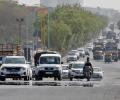
Domestic passenger vehicle wholesales were down 0.8 per cent at 3,44,656 units in May this year as compared to 3,47,492 units in the same month last year, Society of Indian Automobile Manufacturers said on Monday.
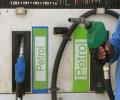
'The E20 usage accrues the huge benefit to the nation, to the society, to the farmer, to the environment, to the exchequer and all of us'

Maruti Suzuki India (MSIL) said on Thursday its operations are unaffected by the global rare earth magnet shortage, but added that the situation is "uncertain and evolving". The firm said it is exploring multiple solutions to maintain continuity in operations and will notify stakeholders in case of material impact.

Manufacturers of passenger vehicles (PVs) in the first half of the calendar year (2025) reported a modest 0.5 per cent year-on-year increase in wholesale dispatches, while retail sales grew 2.5 per cent for the same period, reflecting a calibrated approach by automakers amid elevated dealership inventories and cautious consumer sentiment. According to the Society of Indian Automobile Manufacturers (Siam), dispatches rose marginally to 2.16 million units, up from 2.15 million units a year earlier.
